Most QR cleaning programs start the same way. Someone prints a sheet of codes, cuts them out and tapes one up in each washroom. It works on the first day. Six weeks later, half of them are curling at the corners, one has been scrubbed off by the crew it was meant for, and another is hanging by a single strip of tape next to a pen scribble.
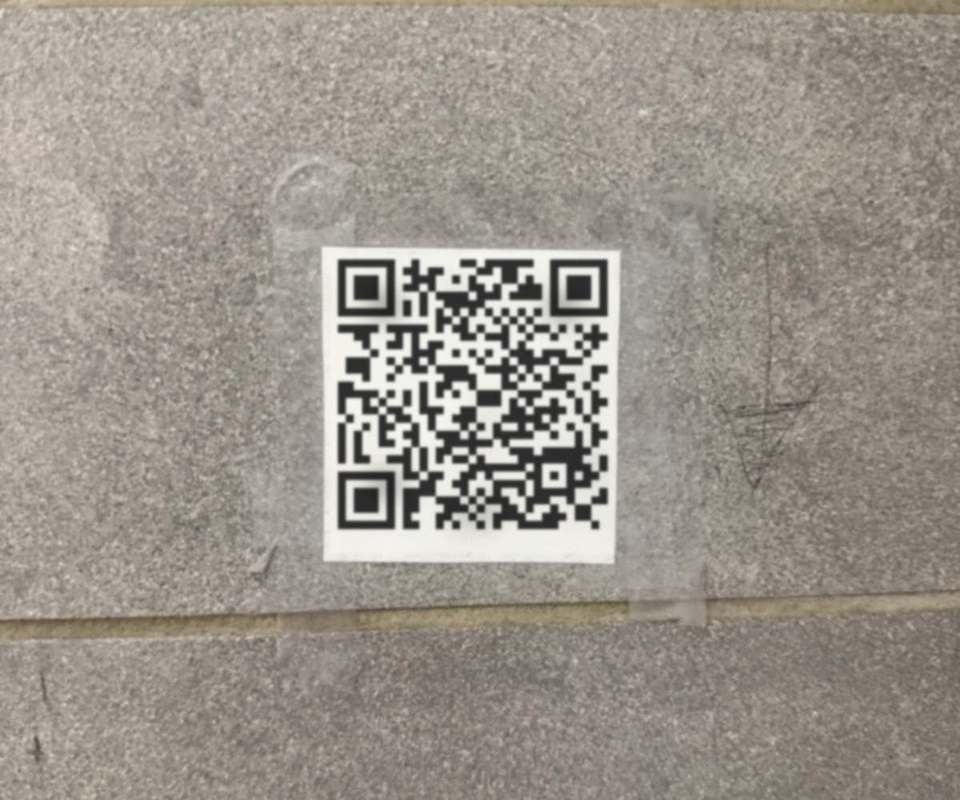
A typical taped paper code. The code in this photo has been replaced and the image softened.
The code on the wall is the only part of your cleaning system most people ever see. Cleaners use it several times a shift. Building occupants walk past it every day. A client touring the site will notice it. If it looks like an afterthought, people assume the program behind it is one too.
This post covers where to put QR signage, how big to make it, what to mount it on, and how to keep it working for years instead of weeks.
What goes wrong with taped paper
Paper is the fastest way to get started, and it is fine for a pilot. It is a poor way to run a building:
- It does not survive cleaning. Washrooms get wiped down daily with chemicals that soften paper, lift tape and smear toner. The sign is in the one room built to be wet.
- It gets removed. A crew wiping a wall, a tenant who finds it untidy or a passer-by who is curious. Every missing code is a gap in your records until someone notices.
- It does not explain itself. A bare code with an internal label like “B2-W3” tells a visitor nothing and gives them no reason to scan.
- It looks temporary. Tape lines, yellowed edges and scribbles undo the message the code is meant to send: that this space is looked after.
The real cost is the replacement cycle
The paper is cheap. The reprinting is not. Take a modest portfolio of 40 areas where a taped code lasts about six weeks before it needs replacing. That is roughly 350 replacements a year. At ten minutes each to notice, reprint, walk over and re-tape, that is close to 60 hours a year, before you count the missed logs while a code was missing.
A durable plaque is mounted once. For most teams it pays for itself in the first few replacement cycles it avoids.
Where to put the code
Consistency matters more than any single rule. Put the code in the same place in every area so cleaners stop searching for it.
- Eye level. Center the code roughly 1.2 to 1.5 m (48 to 60 in) from the floor, so it is easy to scan for most people without bending or reaching.
- At the entrance, on the latch side. Just inside or just outside the door, beside the handle, is where a cleaner’s hand and eyes already go. Avoid the area a door swings over, where the sign is hidden half the time.
- Out of the splash zone. Keep it away from sinks, hand dryers and mop sinks, and above the line where floor scrubbers and buckets hit the wall.
- In good light, without glare. Overhead downlights on a glossy surface can wash out a code. A satin or matte finish scans more reliably than a mirror-like one.
- On a flat surface. Curved or ribbed surfaces distort the code. If the only spot is a tiled wall, pick a single tile face or use a plaque that sits proud of the grout.
If the sign also identifies the room, check your local accessibility requirements for mounting height and tactile lettering. Those rules apply to room identification signs, not to the QR code itself, but the two often share a wall.
How big to make it
A phone camera needs enough pixels across the code to read it. A practical rule of thumb is that the code should be at least one tenth of the distance it will be scanned from. At arm’s length, about 30 to 40 cm, that means a code of at least 3 to 4 cm across. Bigger is better for codes that visitors might scan from a few steps away.
Keep a clear white margin around the code (the quiet zone), use dark ink on a light background, and do not put a logo or texture through the middle of it.
Tell people what the code does
A code with a sentence next to it gets scanned. A code on its own gets ignored. Every sign should carry:
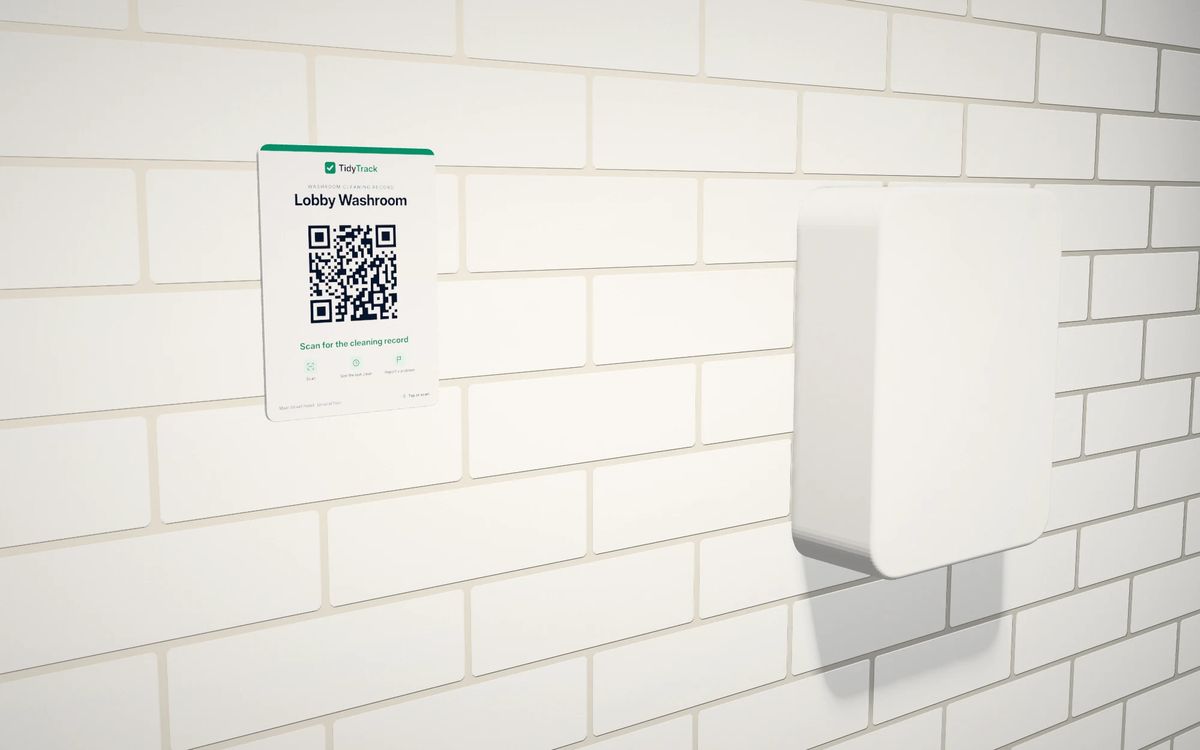
- The area name in plain language, so a cleaner knows they are in the right place and a visitor knows what it refers to.
- A short call to action, such as “Scan to log a clean” or “Scan for the cleaning record”.
- Who it belongs to, your brand or your client’s, so it reads as official rather than a random sticker.
Choose a finish that matches the wall
- Laminated vinyl stickers suit back-of-house areas, stainless steel, glass and partitions. They are flat, wipe clean and cost little.
- Acrylic plaques suit washrooms and break rooms. They sit slightly off the wall, hide uneven tile and handle daily wipe-downs.
- Brushed aluminum plaques on standoffs suit lobbies and front-of-house washrooms, where the sign is part of the fit-out and needs to look like it belongs.
Add NFC where scanning is awkward
An NFC tag behind the sign opens the same page with a tap. It helps when the light is poor, when gloves make the camera fiddly, or when a cleaner simply prefers it. Keep the QR code too: visitors are more familiar with it, and it works on every phone with a camera.
Keep the code and the sign in step
The sign is only as good as the link behind it. Use one live code per area from your cleaning system, so a scan always lands on the right checklist or record. If you ever retire a code, for example after a security concern, replace the sign the same week rather than leaving a dead code on the wall.
A quick checklist
- One code per area, in the same position in every area
- Centered at about 1.2 to 1.5 m, on the latch side of the entrance
- Clear of splash zones, door swings and floor equipment
- At least 3 to 4 cm across, dark on light, with a white margin
- Area name, a one-line instruction and your brand on the sign
- A finish that suits the surface and survives daily cleaning
- A replacement plan for any code you retire
How TidyTrack handles it
Every area in TidyTrack has its own live QR code, and you can print posters for free from the app. When you want signage that lasts, TidyTrack QR plaques come printed with each area’s current code in vinyl, acrylic or brushed aluminum, with an optional NFC tag and the mounting hardware included. You pick the areas in the app, pay at checkout and mount them once.